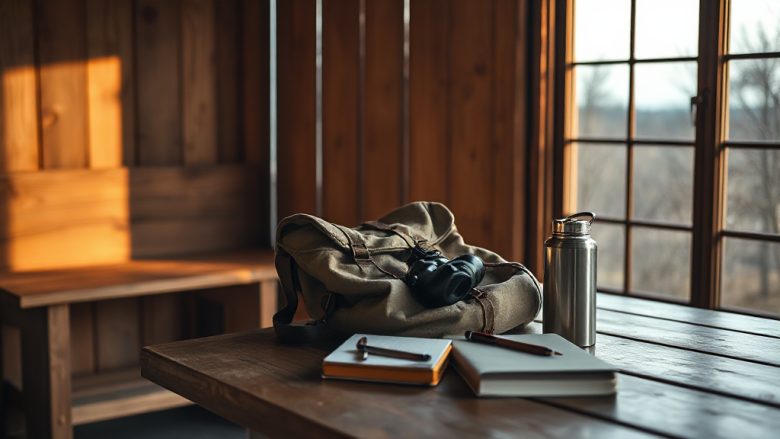
It’s 5:40am and the kitchen light is the only one on in the house. You’re standing at the counter with a half-packed rucksack, wondering whether binoculars count as essential or embarrassing, and whether the flask is overkill. Outside, the sky is still that flat grey that means dawn is thinking about it. You’ve got a local reserve in mind, a path you’ve walked a hundred times without ever really looking, and a quiet worry that everyone else there will know exactly what they’re doing while you stand around squinting at a bush.
Here’s the thing worth hearing before you zip the bag: the best piece of kit you’ll carry is patience. Birds don’t perform on request. A birdwatching checklist for first timers isn’t about gear envy or field-guide credentials — it’s about removing the small obstacles that stop you from simply standing still and paying attention. Everything below is aimed at one morning out, not a lifetime of accumulation.
What to Pack: The Kit That Actually Earns Its Place
You can spend a fortune on optics before you’ve identified your first great tit. Don’t. For a first outing, the goal is to see birds clearly enough to enjoy them, and to carry nothing that makes you reluctant to walk another mile.
Binoculars are the one item that genuinely changes the experience. If you’re borrowing a pair, 8×42 is the forgiving starting point — the first number is magnification, the second is lens size, and that combination balances reach with a wide enough view to actually find a moving bird. Cheap compact binoculars with tiny lenses will frustrate you in low morning light, which is exactly when birds are most active. If you have nothing yet, go anyway. Your eyes and ears work fine, and a reserve’s feeding station will put birds close enough to see without glass.
A notebook and pencil beat an app for your first trip. Phone screens are bright, batteries die in the cold, and typing while a warbler moves through branches is a losing game. A small pocket notebook lets you jot the time, the weather, where you were standing, and a rough description — “small, olive-brown, pale stripe above the eye, flicking through brambles” — which is far more useful for later identification than a blurry photo. A pencil doesn’t run out of ink or freeze.
Add a field guide if you own one, ideally a regional guide rather than a continental doorstop. If you don’t, don’t buy one the night before. Note what you saw and look it up at home with a cup of tea. You’ll remember it better that way.
The rest is comfort: water, a snack, a charged phone kept in a pocket rather than waved about, and a small plastic bag for your own litter. Some people carry a torch for pre-dawn starts, though on most reserve paths in October you’ll have enough light by the time you reach the first hide. If you’re heading somewhere with a visitor centre, a few coins or a card for the donation box and a coffee is a kind thought, not a requirement.
One short list, since this is the only one in the piece: binoculars, notebook and pencil, water, snack, weather-appropriate layer, and a bag you don’t mind putting on damp ground. That’s it. Anything more is optional.
What to Wear: Dressing to Disappear
Birdwatching is mostly standing still in cold air, which is a different physical experience from walking the same distance. Dress for the standing, not the walking.
Muted colours help. You don’t need full camouflage, and you’d look odd in it on a public footpath, but a bright red jacket announces you from a long way off. Greens, browns, greys and dark blues blend into hedgerows and reedbeds. Avoid rustling fabrics if you can — crisp waterproofs that crackle every time you lift an arm will empty a bush faster than a barking dog.
Layers matter more than any single garment. A base layer, a fleece, and a windproof shell will keep you comfortable through the temperature drop that happens when you stop moving. Gloves are worth packing even in early autumn; cold hands make binoculars shaky. A hat with a small brim shades your eyes and, usefully, keeps rain off your glasses. Sturdy footwear is non-negotiable on reserve paths, which are often muddy, uneven, or both. Wellies in winter, walking shoes the rest of the year.
Leave the jewellery and the crinkly plastic bags at home. Sound travels further than you think at dawn, and a rustling packet of crisps will clear a whole hide.
Field Etiquette: How to Behave in a Hide and on the Path
Nobody expects a first-timer to know the unwritten rules, but a handful of habits will make you welcome and, more importantly, make you see more birds.
Approach a hide quietly and slowly. Open the door gently, close it behind you, and take a moment to let your eyes adjust before you reach for the shutters. Choose a seat away from the busiest window if there’s space. When you open a viewing hatch, do it slowly — a sudden flap of wood sends everything on the water into the air. If someone already has binoculars raised, wait until they lower them before you open anything nearby.
Talk in a low voice, and not much. A hide is a shared space, and the person beside you may be watching something rare. If you want to point something out, a quiet “small wader, left of the island” is more helpful than a shout. Don’t tap the glass, don’t lean out of the window, and don’t feed the birds unless the reserve explicitly invites it — bread does ducks no favours and attracts rats.
On the path, keep to the marked route. Nesting season runs roughly from March to August, and a shortcut through reeds or scrub can crush eggs or disturb sitting birds without you ever noticing. Keep dogs on leads where signs ask, and give grazing livestock a wide berth. If you flush a bird accidentally, stop, step back, and let it resettle rather than following it.
Photography etiquette is simple: no flash, no baiting, no getting closer for the shot. A bird that flies off because you wanted a better angle has lost feeding time it needed. The reward for restraint is usually a better view anyway.
Recording What You See Without Fancy Gear
The point of recording sightings isn’t to build an impressive list. It’s to train your eye. Writing something down forces you to look properly, and a page of your own notes will teach you more about local birds than any app.
Start with the basics. Date, time, place, weather, and how long you stayed. Then, for each bird, note where it was — on the water, in the treetops, on the mud, in the hedge — and what it was doing. Behaviour is often more distinctive than plumage. A bird bobbing its tail on a rock by a stream is telling you something a photo might not.
Describe size by comparison, not centimetres. “Bigger than a sparrow, smaller than a blackbird” is a genuinely useful note. Then work through the features in order: overall colour, head pattern, bill shape, wing pattern, tail, legs. Write what you actually saw, not what you think it should be. If you’re unsure, say so — “possible chiffchaff, not certain” is a perfectly good entry.
If you want to use your phone, use it as a voice recorder for quick observations rather than trying to identify birds live. There are excellent birdsong apps, but playing calls back to attract birds is disruptive and often against reserve rules; listening apps that identify sound passively are a gentler option. Keep the volume off and the screen dim.
At home, go through your notes with a guide or a local sightings page and see what you can pin down. Don’t worry about the ones you can’t. A first trip where you confidently identify three species and enjoy six more without naming them is a success. Over a season, your notebook becomes a record of a place — which trees the goldcrests favour, when the first redwings arrive — and that’s a far richer thing than a tick list.
You will probably get something wrong. You’ll call a dunnock a sparrow, or spend ten minutes watching a moorhen you were sure was something rarer. That’s fine. Every birder you’ll meet in that hide has done exactly the same, and most of them are still doing it. The birds don’t care whether you know their names. Pack the bag, wear something quiet-coloured, walk slowly, and let the morning do the rest. The confidence you’re worried about missing isn’t a prerequisite for starting — it’s what quietly accumulates, one unhurried hour at a time.