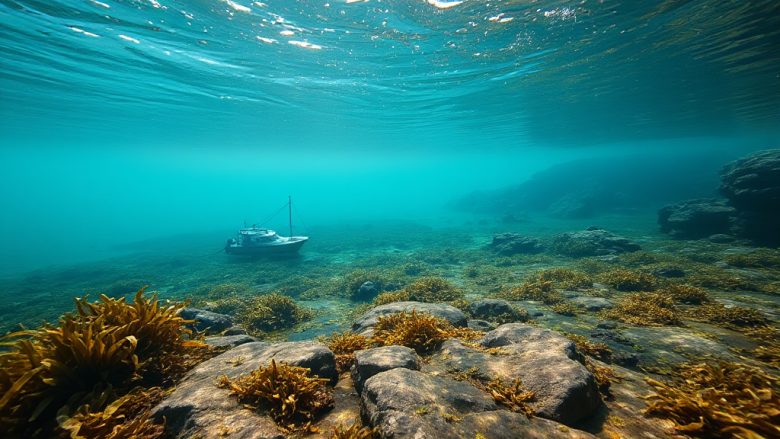
Marine conservation is one of those subjects that people care about deeply and understand vaguely. We all know the ocean is in trouble. We have seen the images of bleached coral, tangled turtles, and plastic islands. But ask most people what marine conservation actually does all day, and the answers get fuzzy. Is it mostly scientists counting fish? Protesters blocking trawlers? Charities asking for a monthly donation?
The truth is bigger and more practical than any of those pictures. Marine conservation is a working field with defined goals, measurable tools, and real arguments inside it about what works. This article is a map. It covers what the field is, what is threatening the ocean, how protection and restoration actually function, where communities fit in, how to spot greenwash, and what a single person can realistically do. No guilt trip, no donation pitch. Just the substance.
What Marine Conservation Actually Means
Marine conservation is the practice of protecting and restoring ocean ecosystems and the species that depend on them, while managing human use of the sea so that it stays within ecological limits. That last clause matters. Conservation is not the same as preservation. Preservation says hands off. Conservation says use, but use carefully, with rules, monitoring, and consequences when the rules fail.
In practice, the field spans several kinds of work. Marine biologists study populations, breeding cycles, and food webs. Policy specialists draft and negotiate regulations on fishing quotas, shipping lanes, and seabed mining. Rangers and patrol crews enforce those rules at sea. Restoration teams replant seagrass, rebuild oyster reefs, and nurse coral fragments in nurseries. Community organisers work with fishing villages and coastal towns to design rules that people will actually follow. And a growing number of people work on data: satellite tracking, acoustic monitoring, and open databases that let anyone check whether a protected area is being respected.
Two ideas sit underneath most of this work. The first is that ocean health is not a niche concern; it underpins food security, coastal protection, and a large share of the global economy. The second is that damage is often reversible, but only if the cause is removed. You can replant a mangrove forest. You cannot replant it if a nearby development keeps dumping sediment onto it. Conservation is usually less about heroic interventions and more about removing the pressures that stop ecosystems from recovering on their own.
The Main Threats Facing the Ocean
Threats to the ocean are often listed as if they were separate problems. They are not. They overlap, compound, and make each other worse, which is why single-issue campaigns so often disappoint.
Overfishing is the most direct pressure. It is not only about how many fish are caught, but which ones and how. Removing large predatory fish changes food webs for decades. Bottom trawling scrapes the seabed, flattening structures that took centuries to form. Bycatch kills animals nobody intended to catch: dolphins, seabirds, turtles, sharks. Illegal, unreported, and unregulated fishing adds a layer that is hard to measure and harder to police, especially on the high seas where jurisdiction is thin.
Climate change is the largest long-term threat, and the hardest to fix locally. Warming water pushes species toward the poles or into deeper, cooler water. Marine heatwaves cause mass mortality on reefs. Ocean acidification, caused by absorbed carbon dioxide, makes it harder for shellfish, corals, and plankton to build shells and skeletons. Sea level rise drowns nesting beaches and coastal wetlands. Crucially, climate stress makes every other threat worse. A reef already weakened by warming is far less resilient to a pollution spill or a disease outbreak.
Pollution comes in more forms than plastic. Nutrient runoff from agriculture and sewage triggers algal blooms that strip oxygen from the water, creating dead zones. Industrial chemicals accumulate up the food chain. Underwater noise from shipping and seismic surveys disrupts communication and navigation for whales and dolphins. Plastic is the most visible problem and a genuine one, but it is not the only one, and cleaning it up is not a substitute for stopping it at the source.
Habitat destruction rounds out the list. Coastal development fills mangroves and salt marshes, which are among the most effective carbon stores and storm barriers on the planet. Coral mining, dredging, and anchoring damage reefs. Deep-sea mining, still in its early stages, threatens ecosystems that recover on timescales of centuries or more.
Marine Protected Areas: The Workhorse Tool
If you had to pick one tool that defines modern marine conservation, it would be the marine protected area, or MPA. An MPA is a defined stretch of sea where human activity is restricted, sometimes lightly and sometimes completely. The strongest version is a no-take reserve, where all extractive activity is banned.
The evidence for well-enforced no-take reserves is strong. Fish populations inside them tend to be larger, denser, and more diverse. Crucially, they spill over. Larvae drift out, and adult fish swim beyond the boundary, replenishing nearby fishing grounds. A reserve is not just a museum; it is a production engine for the surrounding sea.
But the word well-enforced is doing heavy lifting. A protected area that exists only on paper, with no patrols, no monitoring, and no community buy-in, is often called a paper park. It delivers none of the benefits and can breed cynicism. Enforcement is expensive, and in many regions it depends on local boats, local knowledge, and local consent. That is why the next sections matter as much as this one.
There is also a design question. A single small reserve protects less than a network of reserves connected by currents and larval dispersal. Size, shape, location, and the rules inside all affect outcomes. Good conservation planning is spatial planning: deciding what to protect, where, and why, with the best available science and a clear-eyed view of who will be affected.
Restoration: Repairing What Has Been Lost
Restoration is the most photogenic part of marine conservation, and the most easily oversold. It works, but only under the right conditions and at a scale that is often smaller than the headlines suggest.
Mangrove replanting is a good example. Done well, with the right species in the right places, mangroves return within a decade and bring back fish nurseries, carbon storage, and storm protection. Done badly, seedlings are planted in mudflats where they cannot survive, or in seagrass beds that were already healthy, and the project fails while still generating a press release.
Coral restoration uses nurseries, where fragments are grown on frames and then transplanted onto degraded reefs. It can rebuild structure and kickstart recovery on a local scale. It cannot outpace repeated mass bleaching events. Restoration buys time; it does not replace the need to reduce warming and other pressures.
Oyster reef and seagrass restoration follow similar logic. Both are powerful because these habitats engineer their own environment, filtering water and stabilising sediment. Both are also slow and site-specific. The honest framing is this: restoration is a complement to protection, not an alternative. A restored reef next to an unregulated fishery is a short-lived success.
Why Communities Decide Whether Conservation Works
Marine conservation has a long history of failing when it is imposed from outside. Coastal communities are not obstacles to conservation; they are usually the difference between a rule that holds and a rule that is ignored.
Consider a fishing village asked to stop harvesting in a bay. If the village has no alternative income, no role in enforcement, and no share in the benefits when fish stocks recover, the rule will be broken quietly and often. If the same village helps design the reserve, runs the patrols, and sees its catch improve within a few years, the rule becomes self-policing. This is not sentimentality; it is practical design.
Community-led management, sometimes called co-management, is now standard in many parts of the world. It includes locally managed marine areas, customary fishing rights, and agreements that blend traditional knowledge with scientific monitoring. It also includes benefit-sharing: tourism revenue, preferential fishing access, or compensation for lost income. Without that, conservation becomes a cost imposed on the people least able to absorb it, and it rarely lasts.
There is a harder truth here too. Some conservation groups have historically excluded local people from decisions, and the backlash has been justified. The field is slowly correcting, but the correction is uneven. When you evaluate a project, ask who is at the table and who benefits.
How to Tell Good Projects from Greenwash
Greenwash is the gap between a project’s marketing and its measurable effect. It is common in marine conservation because the ocean is hard to monitor and the public is easy to impress. A few questions cut through most of it.
First, does the project state a baseline? If a group claims to have restored a reef, what did the reef look like before, and what does it look like now, measured the same way? Without a baseline, a photograph of healthy coral proves nothing.
Second, who is doing the work and who is accountable? Projects with named local partners, published methods, and independent verification are far more credible than those that only show drone footage and a logo wall.
Third, what is the theory of change? A beach clean-up removes plastic, which is good, but it does not reduce plastic production or improve reef health by itself. Be suspicious of any project that claims a small local action solves a systemic problem.
Fourth, does the project address the cause or only the symptom? Planting mangroves while a nearby resort is clearing mangroves is not conservation; it is offsetting, and often poor offsetting at that.
Finally, look for transparency about failure. Honest projects publish what did not work. If everything a group does is a success story, you are reading marketing, not reporting.
What You Can Realistically Do
Individual action matters less than systemic change, and pretending otherwise is a disservice. But individual action is not meaningless. It shapes markets, norms, and politics, and it keeps the issue visible.
The most effective personal actions are indirect. Reducing your own carbon footprint helps, though slowly and in aggregate. Eating less seafood, or choosing lower-impact species, reduces pressure on overfished stocks. Cutting plastic use at the source, rather than relying on recycling, slows the flow of waste into rivers and then the sea. Supporting politicians and policies that fund enforcement and marine planning is probably the highest-leverage thing most people can do.
Direct action has its place too. Joining a local coastal clean-up, volunteering with a monitoring programme, or contributing to a well-vetted organisation all help. If you donate, apply the greenwash test first. If you live near the coast, showing up to a planning consultation about a development or a dredging proposal can matter more than any individual lifestyle change.
What does not help is despair. The ocean is not a lost cause. It is a system under heavy pressure, with parts that are recovering, parts that are stable, and parts that are in serious decline. Marine conservation is the work of shifting those proportions. It is slow, imperfect, and sometimes frustrating, but it is not futile.
Frequently Asked Questions
Is marine conservation only about protecting animals?
No. It covers habitats, water chemistry, coastal livelihoods, fisheries management, and the legal and economic systems that govern ocean use. Protecting animals is one outcome, not the whole field.
Do marine protected areas actually work?
Well-enforced no-take reserves generally do, and they often benefit nearby fisheries through spillover. Poorly enforced paper parks usually do not. Enforcement and local support are the deciding factors.
Can coral reefs still be saved?
Some can, especially if warming is limited and local pressures like pollution and overfishing are reduced. Restoration helps on a local scale, but it cannot outrun repeated mass bleaching. The outcome depends on how quickly the underlying pressures are addressed.
What is the single most useful thing an individual can do?
Support systemic change. Vote for ocean-friendly policy, reduce your consumption pressures, and back projects that are transparent about their methods and results. Personal habits help, but policy and enforcement do the heavy lifting.